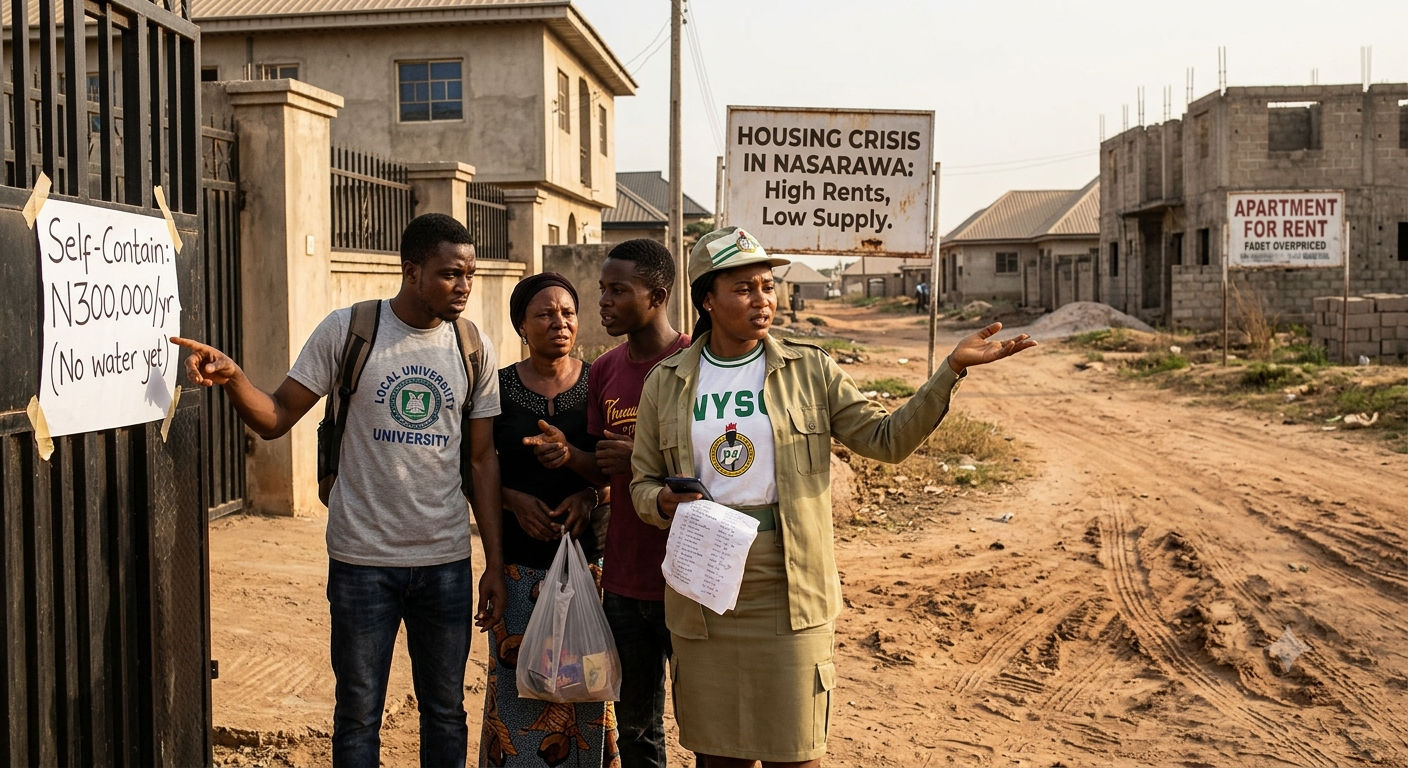
Growing Housing Concerns Across Nasarawa State
Finding affordable accommodation has become an increasing
challenge for many residents of Nasarawa State, according to complaints from
students, workers, families, and individuals relocating to the state. The issue
has continued to generate concern as people searching for homes say they are
faced with rising rental costs, multiple agency charges, and difficulties
securing housing that meets basic living standards.
Students attending tertiary institutions, newly posted
National Youth Service Corps (NYSC) members, and low-income earners are among
those most affected. Many say the search for suitable accommodation often takes
weeks or even months, forcing some to settle for houses that do not provide
adequate security, reliable water supply, or other essential amenities.
The growing concerns have sparked renewed calls for
government intervention, with residents urging authorities to examine the
state's housing situation and introduce measures that make accommodation more
accessible and affordable.
Affordable Housing Becoming Harder to Find
Housing remains one of the most important basic needs for
every individual. Whether someone is moving to Nasarawa State for employment,
education, business, or family reasons, securing a safe and affordable home is
usually one of the first priorities.
However, many people searching for accommodation say the
process has become increasingly difficult. According to residents, houses that
fit the budgets of students and low-income earners are becoming scarce, while
rental prices for available properties continue to rise.
For many households, housing expenses now consume a
significant portion of their income, leaving little money for food,
transportation, education, healthcare, and other daily necessities.
Students, in particular, say limited financial resources
make it difficult to compete in an increasingly expensive rental market.
Students Feel the Pressure
Students studying in different parts of Nasarawa State say
accommodation has become one of their biggest financial burdens.
Many explain that finding a relatively affordable house does
not necessarily solve the problem. They often discover additional challenges
after moving in, including:
- Poor security around residential areas.
- Inadequate or unreliable water supply.
- Poor road access.
- Limited electricity in some communities.
- Buildings requiring maintenance or repairs.
Some students say these conditions affect not only their
comfort but also their ability to focus on their academic work.
Housing conditions can directly influence study
environments, personal safety, and overall wellbeing. When students spend large
portions of their limited income on rent while still dealing with poor living
conditions, the pressure becomes even greater.
NYSC Members Also Face Accommodation Challenges
National Youth Service Corps members posted to Nasarawa
State have also reportedly experienced difficulties securing accommodation.
Because many corps members relocate from different parts of
Nigeria without prior knowledge of local housing markets, they often depend on
estate agents, caretakers, or local contacts to find available apartments.
Some prospective tenants say they encounter multiple charges
before they are even able to secure a property.
These expenses may include:
- Inspection fees.
- Agency fees.
- Agreement fees.
- Caution fees.
- Additional caretaker charges.
Many prospective tenants believe these combined costs
significantly increase the total amount required before moving into a house.
For corps members living on fixed monthly allowances, such
expenses can become a considerable financial challenge.
Residents Express Concerns About Agency Practices
One of the recurring concerns raised by people searching for
accommodation involves the role of agents and caretakers.
According to complaints from some residents, the amount
eventually paid for accommodation can become much higher than the advertised
rent because of additional service charges.
Prospective tenants argue that multiple fees increase the
financial burden at a time when many households are already managing rising
living costs.
While property owners and agents often provide services that
facilitate rental transactions, some residents believe greater transparency
regarding housing-related charges could improve trust between landlords,
agents, and tenants.
Security and Basic Infrastructure Remain Important Factors
Affordability is not the only issue raised by residents.
People searching for accommodation also say they consider
several other important factors before renting a property, including:
- Personal safety.
- Access to clean water.
- Good sanitation.
- Electricity availability.
- Road accessibility.
- Drainage systems.
- Proximity to schools and workplaces.
According to residents, affordable housing should also
provide a safe and healthy living environment.
Some individuals report that lower-priced houses are
sometimes located in areas where basic infrastructure remains inadequate,
making it difficult for families and students to enjoy comfortable living
conditions.
Why Housing Matters Beyond Shelter
Housing plays a central role in economic and social
development.
Affordable accommodation supports:
- Educational success.
- Workforce productivity.
- Business growth.
- Public health.
- Community development.
- Urban planning.
When workers, students, and families spend excessive amounts
on housing, they often reduce spending in other areas of the local economy.
A healthy housing market can also encourage investment,
attract new residents, and support economic activities throughout the state.
Population Growth Continues to Increase Demand
Like many developing regions, Nasarawa State continues to
experience population growth driven by education, employment opportunities,
business activities, and urban expansion.
More people relocating into towns and communities naturally
increases demand for rental accommodation.
When demand grows faster than the supply of available
housing, rental prices may rise, making affordable accommodation more difficult
to obtain for low-income earners.
Urban centres where educational institutions and government
offices are located often experience particularly high demand for rental
properties.
Impact on Students and Families
The housing situation affects different groups in different
ways.
For students:
- Increase financial pressure.
- Difficulty finding accommodation close to campuses.
- Reduced study comfort.
- Additional transportation costs when living farther away.
For families:
- Larger portions of household income spent on rent.
- Limited housing choices.
- Increased cost of relocating.
- For workers and new residents:
- Delays in settling into new jobs.
- Higher moving expenses.
- Challenges finding accommodation within their budgets.
These challenges collectively influence the quality of life
for many residents.
Calls for Government Intervention
Many residents are now appealing to the Nasarawa State
Government to examine the housing challenges facing communities across the
state.
Among the suggestions frequently mentioned are:
- Encouraging the construction of more affordable housing.
- Supporting policies that improve housing accessibility.
- Strengthening security in residential communities.
- Improving water infrastructure.
- Expanding basic public utilities.
- Promoting greater transparency within the housing rental process.
Residents believe that improving infrastructure alongside
increasing the availability of affordable homes could help reduce pressure on
tenants while making the state more attractive to students, workers, investors,
and businesses.
The Importance of Responsible Housing Policies
Housing experts generally agree that sustainable urban
development depends on balancing population growth with adequate housing supply
and supporting infrastructure.
Investment in roads, water systems, electricity, drainage,
and community security often complements housing development by improving
living conditions for residents.
At the same time, clear regulations governing rental
practices can help create a more predictable environment for both landlords and
tenants.
Ensuring fairness and transparency throughout the rental
process benefits property owners, agents, and prospective tenants alike.
Looking Ahead
As more people continue to relocate to Nasarawa State for
education, employment, and business opportunities, the demand for accommodation
is expected to remain significant.
Residents hope that discussions surrounding affordable
housing will encourage broader attention to the challenges they face daily.
Addressing issues such as housing availability, infrastructure, security, and
transparency in rental transactions could contribute to improving living
standards and supporting the state's long-term development.
For many students, corps members, workers, and families, the
issue extends beyond simply finding a place to live. They are seeking homes
that are affordable, safe, and equipped with essential services that allow them
to study, work, and raise families with dignity.
The concerns raised by residents of Nasarawa State highlight
the complex nature of housing affordability and accessibility. While the search
for accommodation has become increasingly difficult for many people, the
challenges go beyond rental prices alone. Additional fees, concerns about
security, inconsistent water supply, and limited infrastructure all contribute
to the difficulties experienced by prospective tenants.
As calls for action continue, many residents are urging policymakers, housing stakeholders, landlords, and community leaders to work together in finding practical and sustainable solutions. Expanding affordable housing opportunities, improving public infrastructure, strengthening security, and encouraging greater transparency in the rental market could help ease the burden on thousands of people who rely on affordable accommodation every year.