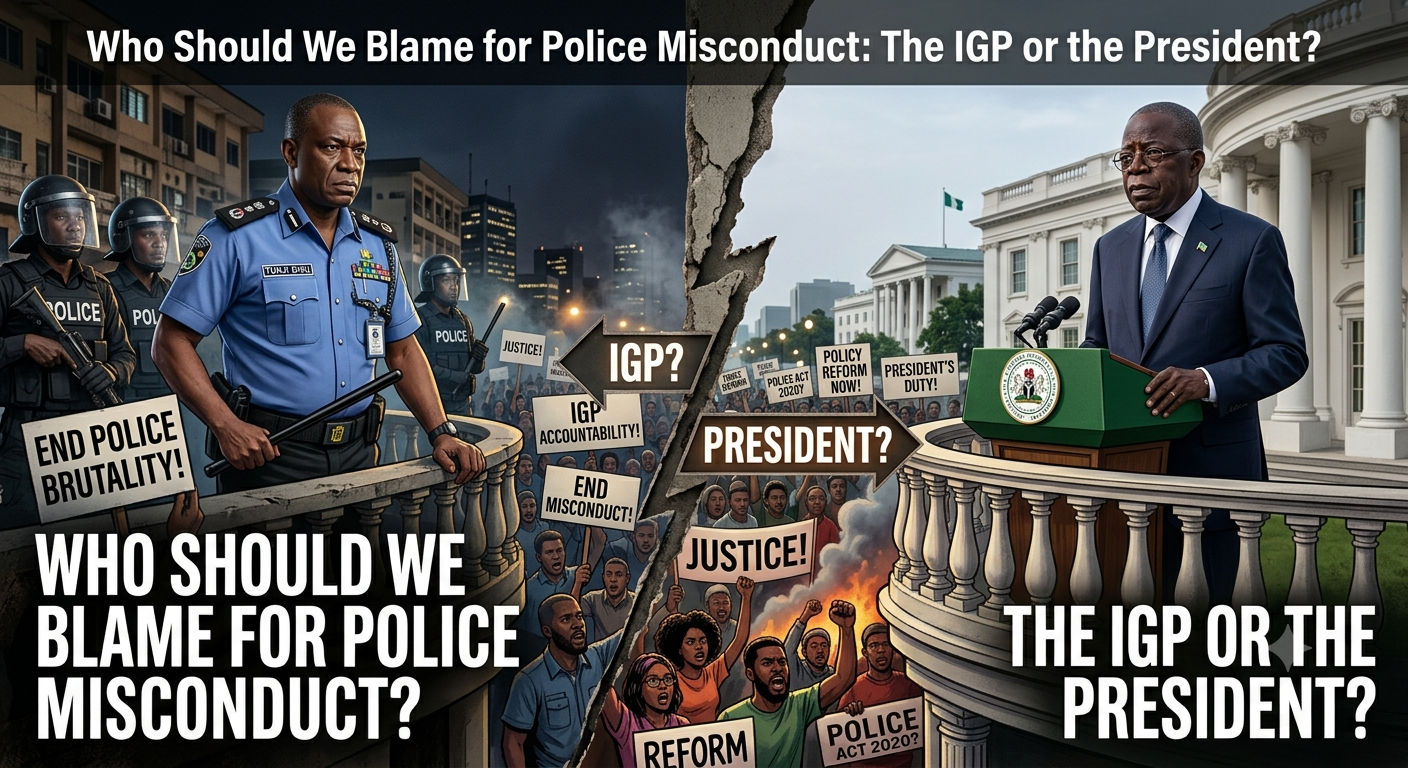
When a police officer extorts a driver, searches a citizen's phone despite official directives, or abuses a suspect, who should take the blame the individual officer, the Inspector General of Police, or the President?
That question was at the centre of a discussion. The answer is not as simple as blaming one person. Police misconduct exists at several levels, and each level carries a different responsibility.
The Officer Still Has Personal Responsibility
Low salaries, poor working conditions, and inadequate equipment can explain why police officers may feel frustrated. But they do not excuse extortion or abuse.
A police officer who demands money from a citizen is still making a personal choice. Financial hardship may explain misconduct, but it does not make the misconduct acceptable.
If low pay becomes a justification for extortion, then every poorly paid public servant could use the same excuse to abuse the people they serve.
The basic principle should be clear:
- A police officer should not demand money from citizens at checkpoints.
- Officers should not force people to unlock or submit their phones without lawful justification.
- Citizens should not face harassment because they refuse to pay a bribe.
- Ethnic profiling should not become part of routine policing.
Individual officers must be held accountable for their own actions.
But What Happens When Misconduct Becomes Widespread?
This is where the responsibility moves beyond individual officers.
If one officer misbehaves, the officer may be the main problem.
But if thousands of officers continue the same misconduct despite repeated directives from police leadership, then the problem is no longer just individual behaviour. It becomes a leadership and institutional failure.
The discussion highlighted how officers continue to engage in practices that police authorities have publicly prohibited, including:
- Searching citizens' phones without proper legal justification.
- Demanding money from motorists.
- Creating unnecessary checkpoints.
- Harassing travellers on interstate highways.
- Profiling people based on ethnicity or location.
The question then becomes: What happens to officers who ignore these directives?
If the answer is usually “nothing,” then the directive has little practical value.
A rule that exists only on paper cannot change an institution.
The IGP Has Direct Responsibility for the Police Force
The Inspector-General of Police is responsible for the operational leadership of the Nigeria Police Force.
That does not mean the IGP personally ordered every act of extortion or brutality. It does mean that the IGP carries responsibility for the system under his command.
A police leader should be judged not only by the directives they issue, but also by how effectively those directives are enforced.
For example:
| Situation | Who has responsibility? |
|---|---|
| An officer personally demands a bribe | The individual officer |
| Officers repeatedly ignore official directives | Police leadership |
| Supervisors fail to discipline misconduct | The chain of command |
| The institution lacks proper reform and oversight | Police leadership and relevant authorities |
| The legal structure prevents effective accountability | The government and lawmakers |
A public statement saying “officers must not extort citizens” means very little if officers who continue doing it face no serious consequences.
Why Highway Checkpoints Have Become a Major Problem
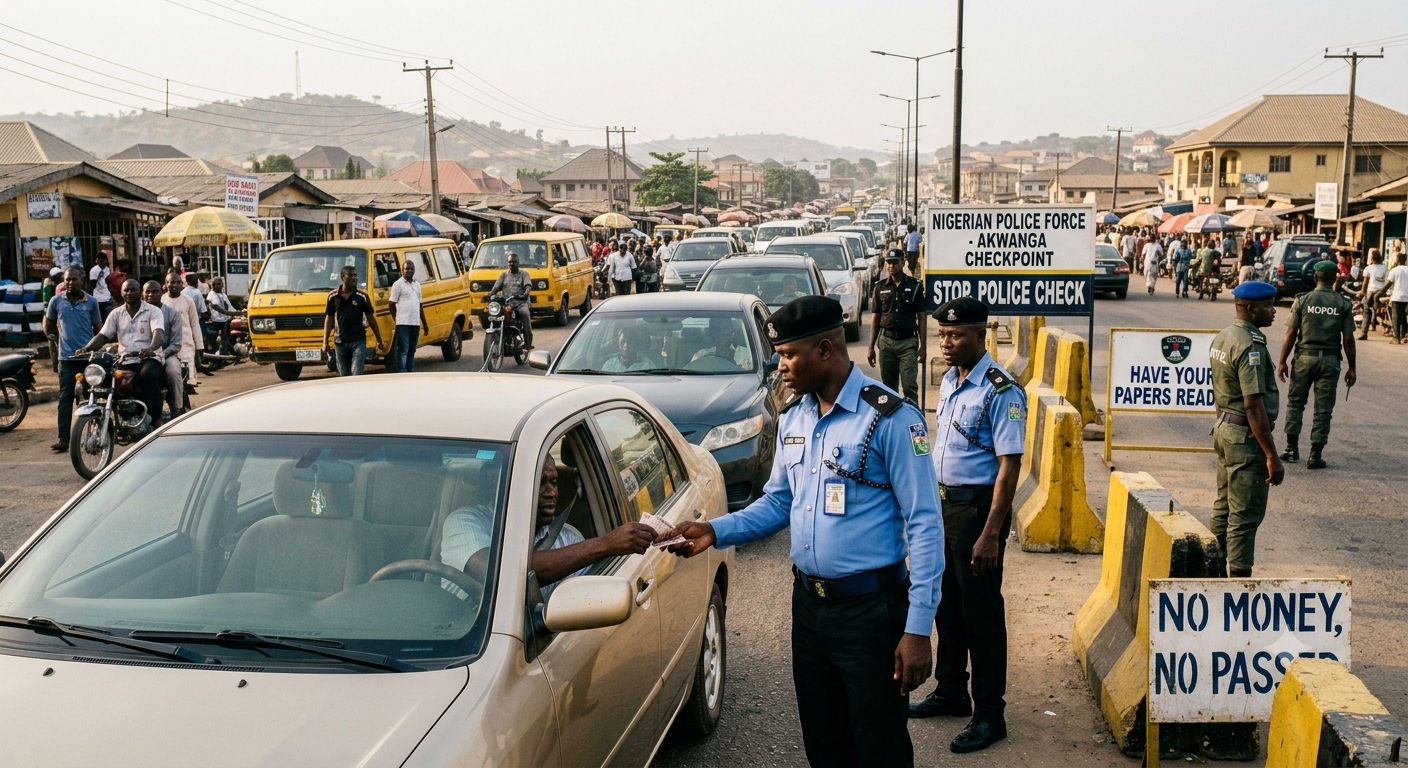
The discussion also raised an important regional concern: the concentration of police checkpoints and alleged extortion along certain roads, particularly in parts of Southern and Eastern Nigeria.
The argument is that officers may take advantage of peaceful, law-abiding travellers because they expect less resistance.
That creates a dangerous situation.
A citizen travelling peacefully should not feel that every checkpoint is an opportunity for an officer to demand money. Police checkpoints should exist for legitimate security purposes not as informal collection points.
The real issue is not simply how many checkpoints exist. The bigger questions are:
- Why was the checkpoint created?
- What is the officer supposed to be checking?
- Who supervises the officers?
- What happens when an officer abuses the checkpoint?
Without clear answers and serious enforcement, checkpoints can become tools for harassment rather than public safety.
Why Does It Sometimes Take a Powerful Person to Expose Misconduct?
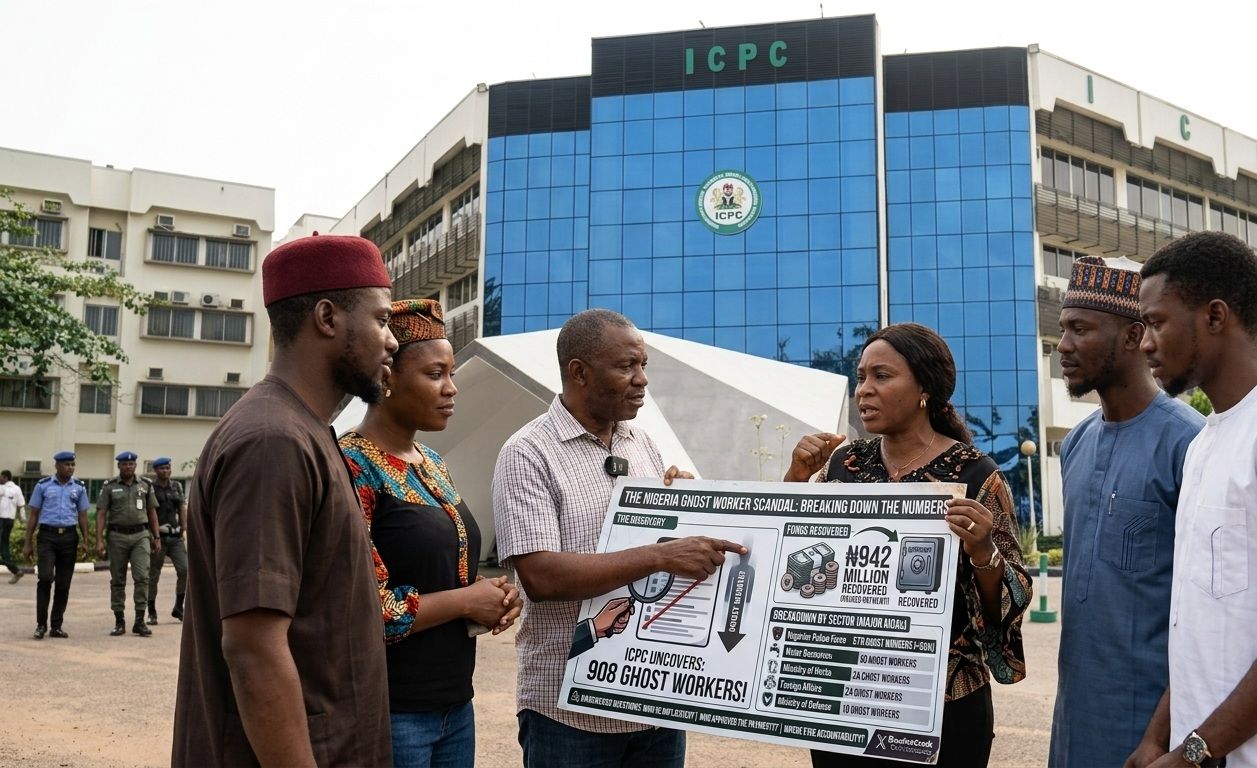
One of the strongest points raised in the discussion was the alleged extortion of a high-profile public official, reportedly the Chairman of the ICPC.
The reaction to such incidents often exposes a deeper problem.
When an ordinary citizen is allegedly extorted, beaten, or humiliated, the incident may receive little institutional attention.
But when a powerful official experiences similar treatment, suddenly:
- Statements are released.
- Investigations are announced.
- Officials become concerned.
- The media pays attention.
That creates a serious question:
Should a police officer be punished because the victim is powerful, or because the officer broke the law?
The standard should be the same for everyone.
If an officer can extort a senior government official, the same officer may have already extorted hundreds of ordinary Nigerians who had no platform to complain.
So, Should We Blame the President?
The President should not be blamed for every individual act of misconduct by a police officer.
However, the President cannot be completely removed from the accountability conversation.
The President is responsible for the broader direction of the government and plays a major role in the country's security architecture, appointments, funding priorities, and reform agenda.
If a system consistently fails to protect citizens, then political leadership must eventually answer difficult questions:
- Are police officers properly trained?
- Are they properly paid and equipped?
- Are bad officers dismissed?
- Are senior commanders held responsible for failures under their watch?
- Does the legal system make accountability possible?
- Are reforms being implemented or simply announced?
The President may not be responsible for a specific bribe demanded by a specific officer. But the government is responsible for creating and maintaining the structure within which the police operate.
The Bigger Problem Is the System
The debate ultimately points to a deeper issue: police misconduct in Nigeria is not only about “bad officers.”
It is also about:
- Weak accountability systems.
- Poor supervision.
- Inadequate training.
- Structural problems within the police force.
- Legal and constitutional limitations.
- A culture where misconduct can continue without serious consequences.
This does not mean individual officers should escape responsibility.
It means the country must address both sides of the problem.
Punish the officer who commits misconduct. Fix the system that allows misconduct to continue.
Doing only one of these will not solve the problem.
Should Educational Requirements for Police Recruitment Be Increased?
The discussion also proposed raising the minimum educational requirement for joining the police force, potentially to an HND or B.Sc.
The argument is that the police need more than numbers. They need officers with better reasoning skills, communication abilities, legal understanding, and professional training.
Higher educational requirements could help, but education alone will not solve police misconduct.
A better approach would combine:
- Higher recruitment standards.
- Stronger police training.
- Continuous professional development.
- Better pay and working conditions.
- Independent investigations.
- Fast disciplinary procedures.
- Serious consequences for proven misconduct.
A degree does not automatically make someone honest. Likewise, a lower educational qualification does not automatically make someone corrupt.
Professionalism requires both competence and accountability.
Who Should Be Held Accountable?
The most accurate answer is: accountability should exist at every level.
The individual officer
For the specific act of extortion, brutality, unlawful search, or abuse.
The supervising officers
If they knew about repeated misconduct and failed to act.
The IGP and police leadership
For failing to enforce directives, discipline officers, and reform the institution.
The Police Service Commission and other oversight bodies
For failing to provide effective external accountability.
The government and lawmakers
For maintaining a legal and constitutional framework that may make reform and accountability difficult.
The President
For the broader responsibility of political leadership, national security policy, appointments, funding, and institutional reform.
Blaming only the President is too simplistic.
Blaming only the individual officer is also too simplistic.
The officer is responsible for the misconduct. The leadership is responsible for the institution. The government is responsible for the broader system.
A serious solution must recognise all three levels.
FAQ
1. Is low police pay an excuse for extortion?
No. Poor pay can be a legitimate policy problem that the government must address, but it does not justify an officer demanding money from citizens or abusing them.
2. Can the IGP be blamed for every police officer's misconduct?
No. Officers are individually responsible for their own actions. However, the IGP and police leadership can be held responsible when widespread misconduct continues because of poor supervision, weak enforcement, or failure to discipline officers.
3. What is the best way to reduce police misconduct in Nigeria?
Nigeria needs a combination of better recruitment and training, improved working conditions, independent oversight, faster investigations, and real consequences for officers who abuse their powers. Directives alone will not solve the problem if officers know they can ignore them without consequences.
Author: https://Houseinnasarawa.com